
06 Dec
Security Situation in Afghanistan
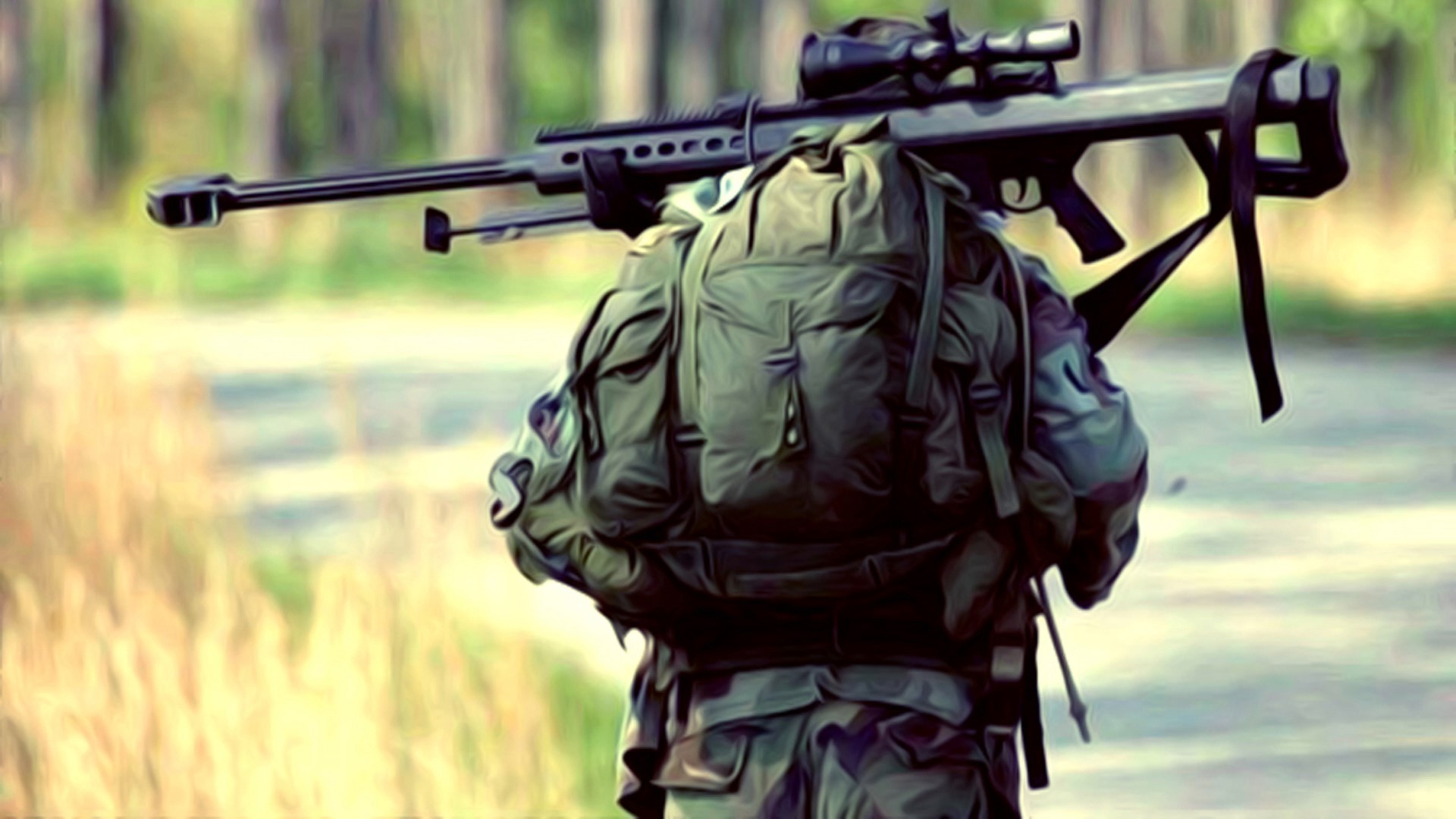
This month started with a notable dent to Afghanistan-Pakistan foreign relations as on 2nd of December a terrorism attack was conducted over Pakistani embassy at Kabul. The Charge d’ Affairs of the Islamic Republic of Pakistan, Ambassador Ubaid Nizamani, was targeted by an assassination attempt via terrorist gunmen, in Kabul, the capital of Afghanistan. The assailant that attempted to attack Pakistan’s Embassy in Kabul fired over 100 rounds of ammunition and 7 sniper shots into the embassy, and is of Turkmen or Uzbek ethnicity. one more accomplice of the attacker was arrested on 3rd December. The suspect is currently believed to be a hired hitman/mercenary and was occupying a room on 8th floor of a commercial building close to embassy compound, where he had placed multiple IEDs on the floor from where he was shooting from, and had a rappelling set-up to escape down the side of the building as Taliban forces reached the spot. Fortunately he was later captured by forces on the ground. The attacker had in his possession a total of 3 firearms, including a modified AK-47 assault rifle, a long range automatic rifle and a sniper weapon along with five hand grenades, a wifi camera and communications equipment. Both suspects are at a secure location at this time, undergoing enhanced interrogation. It is believed that a foreign organisation is involved in the plot to kill the Pakistani ambassador in Kabul. Taliban's spokesman Zabihullah Mujahid in a statement claimed that Afghanistan’s special forces has arrested the person responsible for the attack at the Pakistani embassy. The person arrested is a citizen of a foreign country & member of ISKP who organised the attack together with "rebels". Islamic State Khorasan (ISKP) also officially claimed on 3rd December the attempted attack which targeted Pakistan's Chargés d'Affairs. The group claims two militants attacked Pakistan's Chargés d'Affairs & his bodyguards with medium weapons and snipers. Pakistan's Special Representative for Afghanistan, Muhammad Sadiq has stated that After ISKP’s claim, Pakistan will verify the veracity of the claim before acting further. Two day earlier to the attack, Islamic State Khorasan's (ISKP) mouthpiece al-Azaim published issue 14 of Pashto language magazine Khorasan Ghag-66-pages long, it features articles including a piece on Afghan Taliban accepting foreign aid & one on Afghan Taliban's implementation of hudud. The biographic section features ISKP militant Wahdat, from Chaparhar district, Nangarhar province, who joined ISKP in 2015 and was involved in urban warfare and transfer of ISKP militants.
Prior to that, on 30th
November, At least 10 students had been killed in a bombing at a religious
school in Afghanistan's city Aybak in Samungan province. According to
Afghanistan’s interior ministry, there have been quite a number of wounded
people reported too. Moreover on 2nd of December, 2 Militants got Killed as they attacked on Afghan
Politician Gulbadin Hekmatyar's Party
Headquarters. As per details, unidentified militants tried to storm the
headquarters of the Afghan party Hizb-e Islami headed by veteran politician
Gulbuddin Hekmatyar. According to sources, attackers were killed as they tried
to enter the Kabul building, and one of
them escaped. Gulbadin Hekmatyar was
inside at the time but was unhurt. On the same day Zabihullah Mujahid, IEA’s
spokesperson, announced that based on the Emir of Afghanistan’s decree, Sheikh
Mohammad Qasim Khalid has been appointed as the new governor of Kabul. According
to Mujahid, Khalid was the Taliban’s former deputy minister of tribal and
border affairs. Also On 1st November,
Supreme Court of Afghanistan publicly awarded flogging sentence to 21
people including 6 women for the crimes adultery, theft, pederasty, in Kabul. The Emir of Afghanistan Hebatullah Akhundzada
had recently ordered judges to enforce Islamic laws as corporal punishment is
obligatory for such crimes. In addition on 1st December, the government
of Afghanistan blocked transmissions by 2 news radio stations (VOA & Radio
Azadi) funded by the US government, saying they had repeatedly "failed to
adhere" to government press laws, "violated journalistic
principles" and aired "one-sided broadcasts. In
another report, The United Nations Office for Coordination of Humanitarian
Affairs in Afghanistan (OCHA) said that a staggering two thirds of
Afghanistan’s population will need humanitarian assistance in 2023. Further
more, on 5th November, A delegation from the Islamic Emirate of
Afghanistan headed to the United Arab Emirates, where they met its president. The
defence minister of the Afghanistan has met the president of the United Arab
Emirates (UAE), Sheikh Mohammed bin Zayed al-Nahyan, for talks in Abu Dhabi on
strengthening relations. The defence minister, Mullah Yaqoob, is the son of the
late supreme leader of the Taliban, Mullah Omar, and the meeting with the UAE
president is a rare encounter between a senior member of the group and a
foreign head of state.
Moreover on 30th November, United States Central Command (US Centcom) spokesperson had officially stated that Islamic State’s leader Abu al Hassan Al Hashmi Al Qureshi was killed in October by the Free Syrian Army in Da’ra Province of Syria. On the same day ISIS issued a 9.44 minutes long message from spokesman Abu Omar al-Muhajir announcing the death of its leader Abu al-Hasan during a fight. It also announced a new leader, Abu Hussain al-Hussaini. Soon after the announcement, many ISIS linked media channels and unofficial groups in various languages has been issuing pledges of allegiance to the new ISIS leaders. Islamic State Khorasan Province's (ISKP) mouthpiece Al-Azaim Pashto also published its official pledge of allegiance to new ISIS leader Abu al-Hussaini. Apart from that, it was reported that on 1st December, a commander of National Resistance Front (NRF), Commander Baz Muhammad, along with his 12 men had surrendered and relinquished to Islamic Emirate of Afghanistan in Panjshir Province. The NRF is led under the leadership of Ahmad Masood, the son of the late resistance front commander Ahmad Shah Masood when the Afghan capital collapsed in mid-August last year. Ahmad Masood recently on 30th November had made a statement calling for elections to be held in Afghanistan in order to create a legitimate government.
Analysis
Tensions between Islamabad and Kabul continue to rise. While Pakistan has made efforts to smooth over the growing rift, by reopening crossing at Spin Boldak-Chaman closed following cross-border gunfire that killed a Pakistani security guard on Nov. 13 and sending its minister of state for foreign affairs on an official visit to the Afghan capital at the end of November, there are clear signs that Pakistan’s leverage with the Afghan Taliban seems to be slipping fast. Clashes along the disputed Afghanistan-Pakistan border have been a recurring problem. Since the Taliban took over Afghanistan in August 2021, the frequency of such clashes has only increased. Until recently, Pakistan has downplayed the border clashes, calling for a diplomatic resolution to the problem, but the issue of unrest in Pakistan’s Pashtun belt has become too big to be brushed aside. Even with a seemingly pro-Islamabad regime in Kabul led by the Afghan Taliban, the underlying issues between the two countries remain difficult to resolve. Kabul’s consistent refusal to accept the Durand Line as the international border between Pakistan and Afghanistan, which has triggered the recent clashes between their security forces, remains a key driver of tensions, undermining trust and provoking enmity. Moreover, the new Afghan rulers are grappling with numerous governance challenges in terms of international recognition, humanitarian aid, basic healthcare, women’s education, and infrastructure development, as well as countering the terrorism threat from ISIS-Khorasan Province (ISKP).
Moreover the fact that the delegation was led by defence minister, Mullah Yaqoob Mujahid, the son of the founder of the Taliban movement Mullah Omar, seems to me as a proof that the he is hoping to play a role in projecting a more measured image of the IEA as since being named acting defence minister, Mullah Yaqoob has made several public statements calling for moderation among the Islamic Emirate’s forces. He has also accused unnamed outside interlopers of trying to sully the name of the Taliban by posing as members of the group and harassing or abusing civilians.
Comments
John Doe says:
23/06/2014
Lorem ipsum dolor sit amet, consectetur adipisicing elit, sed do eiusmod tempor incididunt ut labore et dolore magna aliqua. Lorem Ipsum is simply dummy text of the printing and typesetting industry.
ReplayJohn Doe says:
15/06/2014
Lorem ipsum dolor sit amet, consectetur adipisicing elit, sed do eiusmod tempor incididunt ut labore et dolore magna aliqua. Lorem Ipsum is simply dummy text of the printing and typesetting industry.
John Doe says:
15/06/2014
Lorem ipsum dolor sit amet, consectetur adipisicing elit, sed do eiusmod tempor incididunt ut labore et dolore magna aliqua.
John Doe says:
15/06/2014
Lorem ipsum dolor sit amet, consectetur adipisicing elit, sed do eiusmod tempor incididunt ut labore et dolore magna aliqua.