
05 Jan
Security Report of Pakistan
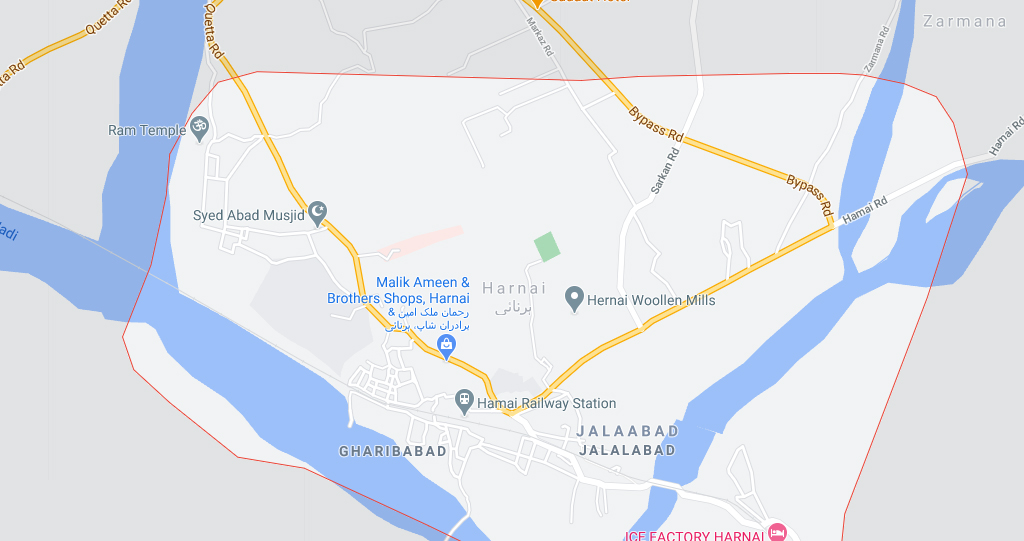
26 December 2020 - Seven soldiers were martyred in a gun attack on a
Frontier Corps (FC) Balochistan post in Harnai district of Balochistan, the
military's media wing said on Sunday.
The terrorists attacked an FC post in
Shahrag area of Harnai on 26 December. During intense exchange of fire, 7 FC
personals martyred. Security forces cordoned off the area and blocked all
escape routes after the attack followed by the operation. The martyred personnel were identified as Naib Subedar
Gulzar, resident of Mianwali; Sepoy Faisal, resident of Hafizabad; Sepoy Abdul
Wakeel, resident of Pishin; Sepoy Sher Zaman, resident of Kohat; Sepoy Jamal,
resident of Dera Bugti; Abdul Rauf, resident of Dera Ghazi Khan; and Faqeer
Muhammad, resident of Muzaffargarh. The incident comes five days after 10
suspected terrorists were killed in a gun battle with security forces
during an intelligence-based operation in Balochistan's Awaran area. These
terrorists were involved in firing on security forces, which resulted in
martyrdom of Lance Naik Mohammad Iqbal on Dec 20 in the Awaran area.
29 December 2020 - Pakistan sentences two on terror-financing charges.
A Pakistani court has
sentenced two alleged members of banned organizations to long prison terms on
terrorism-financing charges. The anti-terrorism court in the port city of
Karachi published its verdicts in the two separate cases on December 29.
Ghulam Rasool Rabbani,
an alleged member of Jamaat-ud Dawa (JuD), was sentenced to 25 years in prison
and a fine of 2.2 million rupees ($13,700), while Muhammad Shakirullah, said to
belong to Al-Qaeda in the Indian Subcontinent (AQIS), was handed a 20-year
prison term in absentia and a 1.1 million rupee ($6,800) fine. Rabbani, who
owns the Jamia Masjid Babul Haramain Sharifain Trust mosque and its madrasah in
Karachi, was arrested on November 15.
Prosecutors alleged
the man had been collecting money for JuD that was then used to finance
terrorism, an accusation he rejected. he
verdicts come as Pakistan faces potential punitive blacklisting by the
Paris-based Financial Action Task Force (FATF), an intergovernmental
organization that underpins the fight against money laundering and terrorist
financing.
In November, a court
in Lahore sentenced JuD leader Hafiz Muhammad Saeed, the alleged mastermind of
the deadly 2008 attacks in the Indian city of Mumbai
2 January 2021 - Pakistan arrests alleged leader of militant group
blamed for 2008 Mumbai attacks.
Pakistani
authorities have arrested an alleged leader of the militant group that was
blamed for the deadly 2008 Mumbai attacks in India. An official with the
Pakistani counterterrorism police, Shakil Ahmed, said on January 2 that Zaikur
Rehman Lakhvi was taken into custody in the eastern city of Lahore on
terrorism-financing charges. Lakhvi is
alleged to be a leader of Lashkar-e Taiba (LeT), the militant group blamed by
the United States and India for the Mumbai siege in which at least 166 people,
including Americans, were killed. Pakistani authorities allege that
Lakhvi was running a medical dispensary in Lahore as a front for financing
militant activities.
A UN Security Council
sanctions committee said Lakhvi is LeT's chief of operations and accuses him of
involvement in militant activity abroad, including in Afghanistan, Iraq,
Bosnia-Herzegovina, and Russia’s North Caucasus region of Chechnya. LeT is an
Al-Qaeda-linked armed militant group that is fighting against Indian control in
the divided Himalayan region of Kashmir and was banned in 2002 after being
linked to an attack on India's parliament.
LeT militants have also carried out attacks against Afghan and foreign troops
in Afghanistan. Lakhvi was a prominent figure in
Hafiz Muhammad Saeed's charity Jamaat-ud-Dawa, which is believed to be a front
for LeT. Saeed, who has been designated a
terrorist by the U.S. Justice Department and has a $10 million bounty on his
head, is presently serving multiple jail terms in Pakistan after being
convicted in several cases in recent months.
The Pakistani government has seized Saeed's
extensive network of mosques, schools, seminaries, charities, and other assets
in the country.
3 January 2021 - Gunmen Kill 11 Shi'ite
Hazara Coal Miners In Southwestern Pakistan
Gunmen
opened fire on a group of minority Shi’ite Hazara coal miners after abducting
them, killing 11 in Pakistan's southwestern Balochistan Province, officials
said on January 3. Moazzam Ali Jatoi, an official with the paramilitary Levies
forces, said the attack took place near the Mach coalfield, about 48 kilometers
east of the provincial capital Quetta. Jatoi said armed men took the coal miners to nearby
mountains where they opened fire on them. He said six of the miners were killed
on the spot and five who were critically wounded died on the way to a hospital.
Jatoi said an initial investigation revealed the attackers identified the
miners as being from a Shi'ite Hazara community and the gunmen took them away
for execution, leaving others unharmed.
Police video of the
bodies showed the miners were blindfolded and their hands tied behind their
backs before being shot. No group has claimed responsibility for the killings. Members of the Shi’ite ethnic Hazara minority have in
the past been targeted by Sunni militant groups, including the extremist
Islamic State (IS), both in Afghanistan and Pakistan.
Local television footage showed security troops
surrounding a desolated mountainous area diverting traffic and guiding
ambulances to pick up the bodies. Security
forces were also seen spreading out in the mountains to search for the
perpetrators. The region, which borders
Afghanistan and Iran, has been plagued by sectarian violence, attacks by
Islamist militants, and a separatist insurgency that has produced thousands of
casualties since 2004.
Analysis
Pakistan
may face a fresh layer of terrorism in near future. The current terrorism
incidents are actually warning to coming situation. From attempts to attack
economic hubs like Karachi Stock Exchange and Islamabad Stock exchange to
attack Chinese investors and companies in Karachi and other parts of country is
mere luck. Military and security authorities are working day and night to
counter emerging threat. The growing influence of China and its close
partnership with Pakistan is not acceptable to world powers. World powers
cannot stop China directly so they are using hard approaches to serve their
interests. It is a need of time that Foreign nationals in Pakistan prioritize
their security measures in Pakistan to keep better flow of economic facilities.

Comments
John Doe says:
23/06/2014
Lorem ipsum dolor sit amet, consectetur adipisicing elit, sed do eiusmod tempor incididunt ut labore et dolore magna aliqua. Lorem Ipsum is simply dummy text of the printing and typesetting industry.
ReplayJohn Doe says:
15/06/2014
Lorem ipsum dolor sit amet, consectetur adipisicing elit, sed do eiusmod tempor incididunt ut labore et dolore magna aliqua. Lorem Ipsum is simply dummy text of the printing and typesetting industry.
John Doe says:
15/06/2014
Lorem ipsum dolor sit amet, consectetur adipisicing elit, sed do eiusmod tempor incididunt ut labore et dolore magna aliqua.
John Doe says:
15/06/2014
Lorem ipsum dolor sit amet, consectetur adipisicing elit, sed do eiusmod tempor incididunt ut labore et dolore magna aliqua.