
26 Oct
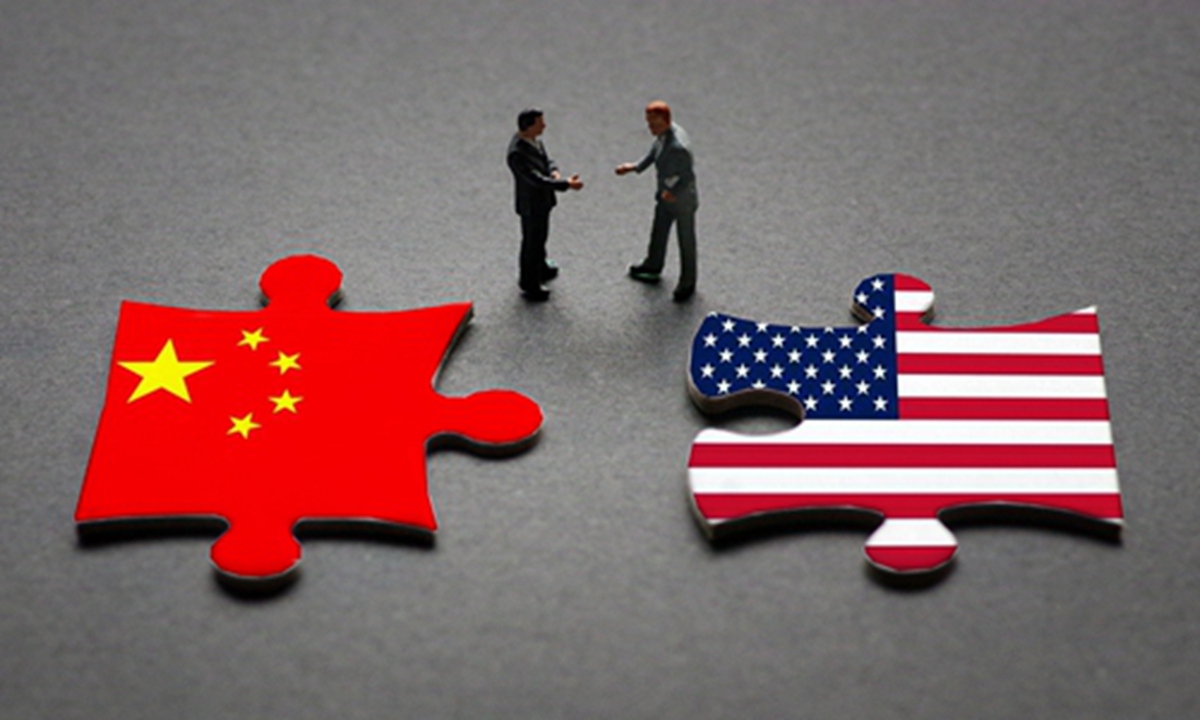
New Approach of US and China in Economic Competition
The previous month saw
a progression of proactive U.S. commitment with partners and accomplices in the
Indo-Pacific district, featured by the declaration of a recently upgraded
Australia-U.K.- U.S. three-sided security organization (AUKUS) and the very first
in-person Quad Leaders' Summit between Australia, India, Japan, and the United
States.
This is a striking
arrangement of occasions, intended to represent the "lead the world by the
force of our model" mantra presented by President Joe Biden during his
first international strategy discourse at the U.S. Division of State recently.
However, maybe more significantly, these moves additionally address the early
phases of an extensive methodology by the Biden organization to work with
"responsible competition" with China, as featured in Biden's comments
at the 76th meeting of the U.N. General Assembly.
From a policy stance,
this "responsible competition" approach fills in as a development to
the new methodology recently expressed by Secretary of State Antony Blinken:
"Our relationship with China will be cutthroat when it ought to be,
communitarian when it tends to be, and antagonistic when it should be. The
shared factor is the need to draw in China from a place of solidarity."
Understanding that
their unparalleled organization of partners and accomplices stays one of the
vital parts of the United States' "position of solidarity," the Biden
organization tries to develop attaches with partners and accomplices. The
objective is to gather a proficient alliance to reinforce its drawn out
seriousness opposite China and apply higher tension on Beijing to act as per a
standards based global request in the Indo-Pacific, while additionally limiting
the danger of contention and staying away from head on a showdown in a Cold War
"lose-lose" attitude.
The United States
additionally endeavors to advance an "integrated deterrence," with
discretion at the cutting edge. This methodology is intended to use both
military and non-military instruments to progress forward presence and force
projection, just as building more grounded protection participation and
improved coordination with partners and accomplices. In this organization of
prevention, AUKUS fills in to act as an illustration of coalition-based
protection associations, supplementing the United States' present military and
security plans in the locale, while the Quad fills in as another system of U.S.
local commitment, with a concentration toward meeting the area's viable
necessities, rather than a huge obsession with security participation and
rivalry with China.
Simultaneously, the
Biden organization keeps on strengthening the decoupling system and diminish
relationship on China, particularly in the super advanced domain. The U.S. has
been looking to screen China's obtaining of American mechanical firms; limit
American speculations and state of the art innovation move to Chinese
organizations connected to the military or homegrown observation areas; boycott
Chinese IT monsters like Huawei and ZTE from working in the U.S.; and approach
partners and accomplices to try not to fuse Chinese 5G innovation in their
frameworks. The U.S. likewise centers around expanding markets, including the
advanced economy and web-based business, supporting binds with partners to
reinforce U.S. seriousness.
Through the Quad,
Washington expects to advance a model of good administration and improvement
for the Indo-Pacific region dependent on standards of receptiveness,
comprehensiveness, straightforwardness, and law and order. The Quad plans to
give public products to nations in the locale, including COVID-19 antibodies
and wellbeing, exclusive requirement framework, instruction, basic and arising
innovation, network protection and space information sharing, and so forth
These are largely spaces of high territorial interest, mirroring a U.S.- drove
aggregate work to introduce a better model of improvement than China's Belt and
Road Initiative.
Simultaneously, the
United States holds its eagerness to cooperate with China. The Biden organization
completely comprehends the trouble of managing critical worldwide challenges,
for example, environmental change, the COVID-19 pandemic and a comprehensive
worldwide financial recuperation without down to earth joint effort with China
and other worldwide forces. What's more, China is biggest trading partner of
the United States' largest source of imports, and third-biggest export market
in 2020. Commodities to China upheld 1.2 million positions in the U.S. in 2019.
Notwithstanding China-U.S. exchange grating, a greater part of American
organizations (87%) decided not to move their creation out of China.
Chinese authorities,
in their public statements, actually saw the U.S. approach with high
incredulity and doubt. Beijing has over and over approached the U.S. what's
more, its accomplices to leave the obsolete Cold War lose-lose attitude and
extremist international discernment. Notwithstanding, as confirmed by ongoing
undeniable level discoursed between the two nations, wherein the two presidents
talked about matters of mutual interests and consented to promote in-depth
correspondence channels to guarantee contest doesn't veer into conflict, China
appeared to appreciate the Biden administration's new approach toward great
power competition, considering this to be as helpful to China's interests.
Other than the resumption of significant level correspondence, the two nations
have as of late given different indications of de-escalation.
With its central role
in advancing regional engagement, ASEAN can assume the part of facilitator,
planning the China-U.S. "responsible competition" to the greatest
advantage of the locale. ASEAN can assist with dispersing public products in a
more powerful way through close conference and coordination, either
respectively, multilaterally with ASEAN all in all, or minilaterally with ASEAN states. Along these lines, ASEAN and the Indo-Pacific all in all can
proactively hold their voice in great power competition, assuming a part in
working with participation and moderating contentions for the interests of all
interested parties.



Comments
John Doe says:
23/06/2014
Lorem ipsum dolor sit amet, consectetur adipisicing elit, sed do eiusmod tempor incididunt ut labore et dolore magna aliqua. Lorem Ipsum is simply dummy text of the printing and typesetting industry.
ReplayJohn Doe says:
15/06/2014
Lorem ipsum dolor sit amet, consectetur adipisicing elit, sed do eiusmod tempor incididunt ut labore et dolore magna aliqua. Lorem Ipsum is simply dummy text of the printing and typesetting industry.
John Doe says:
15/06/2014
Lorem ipsum dolor sit amet, consectetur adipisicing elit, sed do eiusmod tempor incididunt ut labore et dolore magna aliqua.
John Doe says:
15/06/2014
Lorem ipsum dolor sit amet, consectetur adipisicing elit, sed do eiusmod tempor incididunt ut labore et dolore magna aliqua.